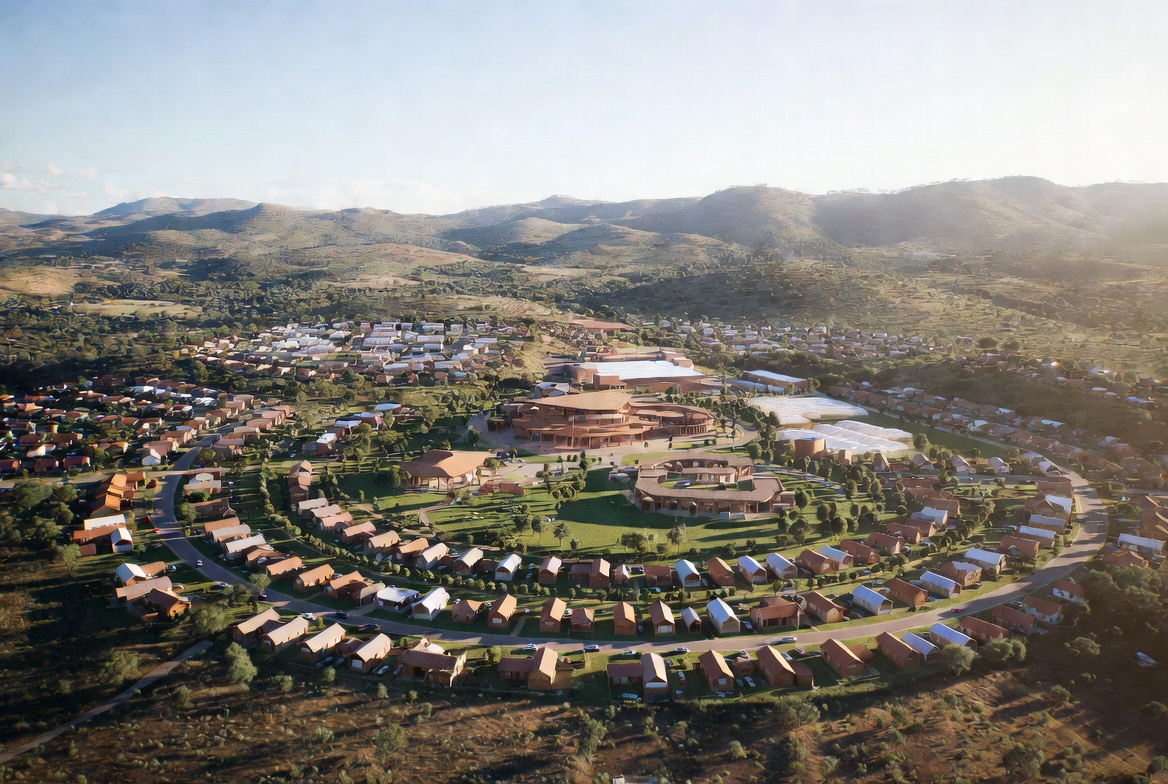
A vision of integrated, harmonious, and productive rural community living.
The physical design of a community is never neutral. It either supports human flourishing or quietly works against it. In too many places across South Africa, people — especially young people — leave rural areas because they see no future there. Towns feel neglected, opportunities are limited, and daily life can feel disconnected from both modern aspirations and cultural roots.
Urban areas, while offering the promise of work, have become increasingly congested, expensive, and socially fragmented. Many young people move to cities not out of genuine desire, but because rural spaces have not been made attractive enough — economically, socially, or emotionally — to compete.
The Productive Sustainable Communities model takes a different approach. It treats design as a powerful tool to reverse this trend — to create rural environments that are not only functional, but genuinely desirable. Places where young people can see a future that is economically viable, culturally grounded, socially connected, and personally fulfilling.
A vision of integrated, harmonious, and productive rural community living.
We are not designing isolated housing estates or purely functional settlements. We are designing living environments that people can feel proud of and emotionally connected to. The goal is to create communities that feel like home in the deepest sense — places where people want to put down roots, raise families, contribute, and stay.
This requires more than good infrastructure. It requires spaces that foster a sense of belonging, identity, and possibility. The design draws on warm, earthy colours, textured materials, and gentle architectural forms — including modern interpretations of rondavel-inspired elements — to create visual harmony and cultural resonance.
Daily life should feel manageable and social. Key functions are connected by safe, shaded pedestrian pathways that encourage casual encounters and reduce isolation.
Spaces are designed so that children, working-age adults, and elders naturally interact. This strengthens families and revives the cultural value of mutual care across generations.
The community is not just a place to live — it is also a place to work, learn, and produce. Agricultural zones, workshops, and the Learning Hub are integrated in ways that make productive life visible and accessible.
The use of earthy tones (terracotta, ochre, warm beiges) and soft architectural forms creates a visual language that feels grounded and culturally familiar. The goal is to evoke a sense of belonging and pride.
The design incorporates appropriate technology and modern comforts (renewable energy, efficient water systems, good connectivity) so that rural life feels like a conscious and attractive choice.
Buildings and infrastructure support water conservation, renewable energy, waste reduction, and productive use of land.
Positioned as the symbolic and practical heart of the community, this Hub combines training facilities, workshops, and community spaces. Its central location and welcoming design signal that learning and personal growth are valued and accessible. Young people can see clear pathways from training to meaningful work within their own community.
These functions are deliberately placed together to encourage natural intergenerational interaction. The design is warm and nurturing, with shared outdoor spaces that allow children and elders to be part of each other’s daily lives. This reflects the value of mutual care across generations and helps young families feel supported.
These areas are designed to be both functional and visible. Young people can see real economic activity happening in their community — workshops, small-scale production, and food growing. This visibility helps shift the perception of rural life from one of limitation to one of opportunity and creativity.
Housing is arranged to balance privacy with community connection. Streets, pathways, and small public spaces are designed to encourage social interaction. The overall aesthetic helps create a sense of place that people can feel proud of and emotionally attached to.
Many young people leave rural areas not because they reject their roots, but because they see no viable or attractive future there. Congested urban areas may offer jobs, but they often come at the cost of high living expenses, long commutes, social isolation, and a loss of cultural connection.
This design attempts to offer a compelling alternative. It combines real economic opportunity through skills and local production, modern comforts and appropriate technology, strong social and cultural connection, and a physical environment that feels cared for, beautiful, and rooted.
When rural communities are designed with intention — with spaces that support learning, work, care, and belonging — they can become places where young people choose to stay and build their lives, rather than feeling they have no choice but to leave.
Every design decision is made in service of the larger goals of the model: creating employment, strengthening families, restoring dignity, and building self-reliant communities. The physical environment either enables or undermines these goals.
The design supports economic activity by making productive spaces visible and accessible. It supports care by integrating Early Childhood Development and elder care into daily life. It supports belonging by creating beautiful, culturally resonant environments. And it supports self-reliance by enabling resource efficiency and local production.
See how this approach delivers real, measurable benefits.
© 2026 AuriGen • aurigen.co.za. All rights reserved. Unauthorized copying or distribution of content is prohibited.